The team spent six months creating the “perfect” first prototype. Every detail was considered. The mechanical design was elegant. The electrical system was optimized. The software was robust and well-documented. They finally presented it to users for testing.
It failed within the first hour. The core assumption about how users would interact with the device was completely wrong. The beautifully engineered solution solved a problem users didn’t actually have.
Meanwhile, their competitor had launched three rapid prototypes over those same six months. Each prototype tested a specific assumption. Each round of user feedback informed the next iteration. By the time the perfectionist team was showing its first prototype, the competitor was shipping a product customers loved—because it’d learned what customers actually wanted through repeated rapid testing.
This isn’t a story about one team being smarter than another. It’s about fundamentally different philosophies of how learning happens in product development.
The Perfectionist Trap That Kills Innovation
The pursuit of perfection in early prototypes feels like good engineering. Do it right the first time. Think through all the requirements. Anticipate problems before they occur. Build something you can be proud of.
This instinct, while admirable, fundamentally misunderstands what early prototypes are for.
Early prototypes exist to generate learning, not demonstrate competence. The goal isn’t creating something impressive—it’s answering specific questions as quickly as possible. Does this user interface make sense? Will customers understand the value proposition? Does the core technology work as we hoped? Can this be manufactured affordably?
Each of these questions deserves a prototype—but not the same prototype, and certainly not a perfect prototype.
The cost of delayed feedback compounds exponentially. Every week spent perfecting a prototype before user testing is a week you could be learning whether your core assumptions are correct. If your fundamental hypothesis is wrong—and in innovation, it often is—those weeks of perfection are wasted entirely.
Worse, the more time invested in a prototype, the more emotionally attached teams become to their approach. A prototype that took six months to create is hard to abandon even when user feedback shows it’s wrong. A prototype that took two weeks to create is easier to discard and replace with a better approach.
Detailed planning cannot replace real-world testing because users are unpredictable, markets evolve, and technology behaves differently outside the lab than in controlled environments. You can spend months analyzing requirements and planning the perfect solution—and still be fundamentally wrong about what users actually need or how they’ll actually use your product.
The alternative is accepting that you cannot predict everything and building learning into your development process through rapid iteration.
Consider a common scenario: A team developing a medical device for hospital use spends eight months designing what they believe is the ideal user interface. They conduct extensive internal reviews, create detailed mockups, and build a high-fidelity prototype. When they finally test with actual nurses, they discover that the interface doesn’t work in the chaotic, time-pressured environment of a hospital ward. The interaction patterns that seemed elegant in conference room discussions are impractical when nurses are managing multiple patients simultaneously.
Redesigning the interface requires four additional months because so many design decisions were interconnected and optimized together. Total time to working prototype: twelve months.
An alternative approach would test rough interface concepts with nurses within the first month, using cardboard mockups and simple digital prototypes. This early feedback would reveal usage patterns and constraints that inform proper design—reducing total development time while producing a better result.
The Learning Power of Imperfect Prototypes
Imperfect prototypes aren’t compromises—they’re strategic tools for managing uncertainty and accelerating learning.
Fast feedback loops transform development velocity. Getting user input every 2-3 weeks versus every 6 months means 12-13 learning cycles per year instead of two. Even if each rapid prototype generates less learning than a comprehensive prototype, the cumulative learning from rapid iteration dramatically exceeds what perfectionist approaches achieve.
This velocity advantage compounds over time. Teams that iterate rapidly build intuition about what works and what doesn’t. They develop pattern recognition that guides better decisions. They catch problems early when fixes are easy rather than late when fixes are expensive.
One hypothesis per prototype focuses on learning effectively. Instead of building comprehensive prototypes that test everything simultaneously, build focused prototypes that answer specific questions. Need to validate the core technology? Build a breadboard prototype that demonstrates functionality without worrying about enclosure, user interface, or manufacturing. Need to test user interaction? Create an interface mockup without fully functional backend systems.
This focused approach provides clearer feedback because you know exactly what each prototype was testing. When comprehensive prototypes fail, you often don’t know which aspects caused the failure. When focused prototypes fail, you know precisely what to fix.
Failure becomes valuable rather than costly. Quick failures prevent expensive mistakes. A $5,000 prototype that fails after two weeks is a bargain compared to a $50,000 prototype that fails after three months. The learning is often identical—this approach doesn’t work—but the cost differs by an order of magnitude.
More importantly, rapid iteration makes failure psychologically acceptable. Teams that can try a new approach every few weeks are comfortable with individual prototypes failing because they know they can quickly try something different. Teams that invest months in each prototype become defensive about failures because the cost feels too high to admit mistakes.
User insights emerge through iteration rather than upfront research. You can interview users extensively, but people struggle to articulate what they need, especially for novel products. Watching users interact with prototypes reveals needs they couldn’t express in interviews and problems they didn’t know they had.
This discovery process requires multiple iterations. The first prototype teaches you what questions to ask. The second prototype tests hypotheses formed from the first. The third prototype is refined based on a clearer understanding. Each cycle reveals insights that couldn’t be obtained through analysis alone.
Consider how this works in practice: A team developing a consumer IoT device builds five prototypes over three months:
- Prototype 1 (Week 1-2): Breadboard electronics demonstrating core sensor functionality—validates technical feasibility.
- Prototype 2 (Week 3-4): Simple enclosure with electronics—tests basic form factor and user understanding of the device.
- Prototype 3 (Week 5-7): Functional device with basic mobile app—tests complete user experience and reveals connectivity challenges.
- Prototype 4 (Week 8-10): Refined device addressing connectivity issues—validates improved architecture and tests with beta users in real environments.
- Prototype 5 (Week 11-12): Near-production prototype incorporating beta feedback—prepares for manufacturing transition.
Each prototype cost $3,000-8,000 and provided specific learning that informed the next iteration. Total investment: approximately $30,000 over three months. The final design reflects real user needs discovered through iteration rather than assumptions made at the beginning.
A perfectionist approach might spend the same $30,000 and three months creating one comprehensive prototype—but without the accumulated learning from rapid iteration.
Treetown Tech’s “Early and Often” Prototyping Philosophy
Systematic rapid iteration requires more than just building things quickly—it requires structured approaches that maximize learning while maintaining technical rigor.
Strategic prototyping plans identify what each prototype should test and how success will be measured. Before building, we ask: What’s the riskiest assumption we need to validate? What’s the cheapest prototype that can test this assumption? What will we learn from this prototype that we don’t know now? What will we do differently based on what we learn?
This clarity prevents building prototypes out of habit or because “we need to make progress.” Every prototype has a purpose, and we measure success by whether it answers the intended questions.
Right-fidelity prototyping matches prototype quality to learning objectives. Need to test if users understand your value proposition? Cardboard mockups and digital prototypes work fine—don’t waste time on functional electronics. Need to validate that your sensor can achieve the required accuracy? Build a test fixture with proper sensors—don’t waste time on enclosures or user interfaces.
The “right” fidelity is the minimum needed to generate valid learning for your current question. Under-fidelity prototypes don’t generate useful feedback. Over-fidelity prototypes waste time and money on details that don’t matter yet.
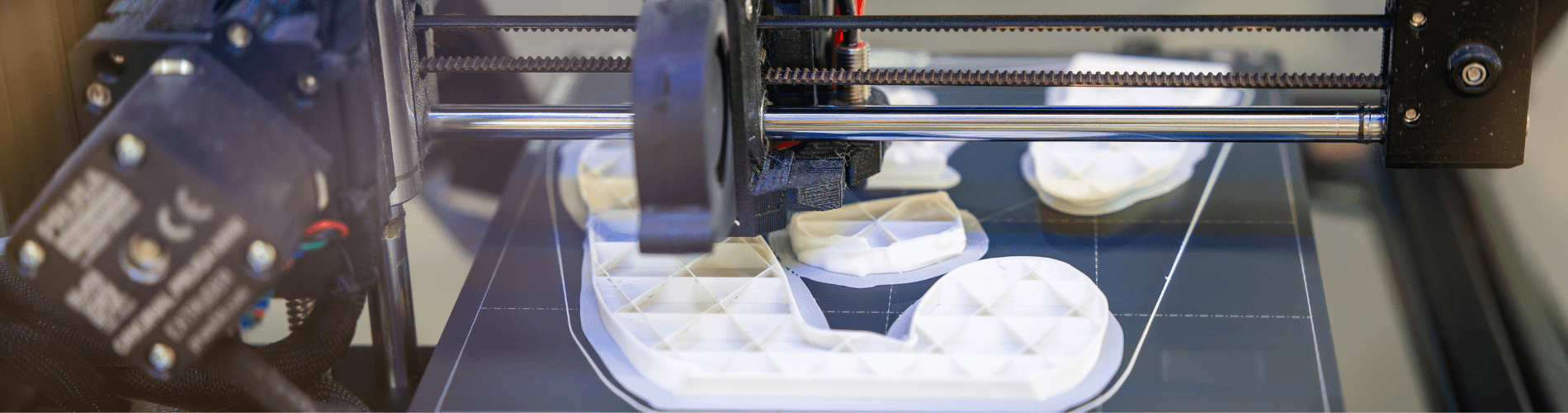
Rapid fabrication capabilities enable fast iteration through 3D printing for mechanical concepts, breadboard prototypes for electrical validation, development boards for software testing, and simulation for early-stage analysis. Having these capabilities in-house means we can move from concept to physical prototype in days rather than weeks.
Speed matters because it enables more iterations within fixed timelines and budgets. The difference between two-week and six-week prototype cycles is the difference between six and two learning cycles over three months—tripling the learning achieved.
Structured user testing ensures prototypes generate actionable insights rather than just opinions. We design tests that reveal how users actually interact with prototypes, not just what they say they like. We observe what they struggle with, what they misunderstand, and what surprises them—insights more valuable than their stated preferences.
This structured testing approach means rapid prototypes generate high-quality learning despite their imperfect implementation.
Balancing Speed with Technical Rigor
Rapid prototyping doesn’t mean sloppy engineering—it means strategic focus on learning rather than perfection.
Documentation evolves with understanding. Early prototypes need minimal documentation because they’re learning tools that will be discarded. Later prototypes need more comprehensive documentation as designs stabilize and knowledge needs to be preserved. This staged documentation approach prevents wasting time documenting approaches that will change while ensuring critical knowledge is captured when it matters.
Quality standards match the prototype’s purpose. Test fixtures don’t need to be beautiful—they need to generate valid data. Demonstration prototypes shown to executives need polish—they need to communicate vision effectively. User testing prototypes need to work reliably enough for valid feedback—they don’t need production quality. Understanding which quality standards apply to each prototype prevents both wasted effort and inadequate prototypes.
Technical risk retirement happens systematically through focused prototyping. The highest-risk technical challenges get prototyped first, before investing in less risky aspects of the design. This approach ensures that if something fundamentally won’t work, you discover it early when pivoting is still relatively easy.
Manufacturing considerations enter prototyping at the right time—not too early when designs are still fluid, but not too late when changes become expensive. Early prototypes can use approaches that don’t scale to production. Middle prototypes should start considering manufacturing constraints. Late prototypes should use production-intent materials and processes.
This staged approach balances rapid learning with manufacturing reality without premature optimization.
Building Rapid Prototyping Into Your Process
Making rapid iteration systematic requires specific practices and capabilities.
Identify key assumptions before designing prototypes. What do you believe about users, technology, market, or manufacturing that might be wrong? Which of these assumptions is most critical to your success? Which can be tested most cheaply? Answering these questions focuses prototyping efforts on the most valuable learning.
Set an iteration cadence appropriate for your product and stage. Two-week cycles work well for software and simple hardware. Four-week cycles suit complex electromechanical products. Whatever cadence you choose, maintain it consistently—predictable iteration rhythm builds discipline and prevents perfectionist drift.
Capture learning explicitly after each prototype. What did we learn? What assumptions were validated or invalidated? What should we do differently next time? This explicit reflection ensures lessons from prototypes inform next steps rather than being forgotten in the rush to the next iteration.
Build prototyping capabilities that enable speed. Whether internal or through development partners, access to rapid fabrication, electronics prototyping, and software development capabilities determines how quickly you can iterate. The difference between having these capabilities readily available versus outsourcing each prototype to separate vendors is the difference between rapid iteration and slow sequential development.
The Bottom Line on Rapid Prototyping
Speed in early development isn’t about rushing—it’s about maximizing learning before committing resources to solutions that might be wrong. Perfectionist approaches that delay feedback until comprehensive prototypes are ready waste time and money on paths that may be fundamentally flawed.
Rapid iteration doesn’t mean accepting lower-quality final products. It means recognizing that the path to great products runs through many imperfect prototypes that generate learning rather than a few perfect prototypes that generate admiration.
Companies that embrace a rapid prototyping philosophy consistently launch better products faster because they’ve learned more about users, technology, and markets through iteration. Those who pursue perfection in early prototypes often launch later with products that reflect initial assumptions rather than accumulated learning.
The revolution in prototyping isn’t about new technologies—it’s about a new philosophy that values learning over perfection and iteration over planning.
Ready to accelerate your development timeline through rapid prototyping? Let’s get your first iteration in your hands quickly and start the learning process. Contact Treetown Tech to explore how our rapid prototyping capabilities and “early and often” philosophy can transform your product development velocity and outcomes.