

Treetown Tech white logo
Electric car lithium battery pack and power connections

Battery Pack Design, Assembly, and BMS Engineering for Demanding Applications

Treetown Tech designs battery packs, battery management systems, and charging solutions for military systems, UAVs, industrial equipment, and other applications where failure isn’t acceptable.

Our in-house engineers handle cell selection, pack design, BMS development, thermal management, validation testing, and transition to production. Nothing is subcontracted to a separate battery vendor. The team that designs your BMS is the same team building your pack and integrating it with your larger system.

Our Capabilities

In-House Design, Cell Selection, and Engineering

All battery development work happens in-house at Treetown Tech's Ann Arbor facility. Our facility includes a machine shop for custom battery holders and cooling systems, a high-bay assembly area for large battery packs, 3D printing for rapid prototyping of pack components, and dedicated electrical engineering, equipment integration, and software labs for BMS development and system validation.

Treetown Tech selects the optimal chemistry and form factor for each application based on energy density, power delivery, cycle life, temperature range, and safety requirements.

When clients come with a preferred cell already specified, we work with it, although we’ll still evaluate alternatives to ensure the best cell is selected for the application.

Thermal Management

Treetown Tech designs thermal management solutions matched to the application: liquid cooling for high-power systems, phase-change materials for weight-constrained platforms, active airflow for industrial enclosures, and passive thermal management, heat spreaders, conductive potting, thermally optimized pack geometry, for applications where simplicity and reliability take priority.

Thermal analysis runs alongside pack design as a design constraint from the first layout decision, not a check run afterward.

Rugged and Military Battery Systems

Military and defense applications impose requirements that consumer and commercial battery designs don't address: battlefield vibration, extreme temperature ranges, shock loads, and MIL-STD compliance requirements. Treetown Tech designs ruggedized battery systems for military UAVs, ground systems, and portable power applications, with hardened enclosures, shock-proofed cell mounting, fail-safes for extreme environments, and compliance with relevant MIL-STD specifications.

The same engineering discipline carries into industrial rugged applications: marine systems, remote power, and industrial equipment operating in environments where commercial battery systems reach their limits.

BMS design incorporates the reliability requirements and environmental specifications of UAV and military programs. A system engineered for the mission from the start, with the protection architecture and communication interfaces those programs require.

Battery Management Systems

Treetown Tech designs custom BMS solutions that monitor cell health, optimize charge cycles, prevent thermal runaway, and extend battery service life.

BMS design at Treetown Tech covers:

  • Cell voltage and temperature monitoring
  • State of charge (SOC) and state of health (SOH) estimation
  • Charge and discharge protection
  • Thermal runaway prevention
  • Communication interfaces (CANBus, SMBus, and others)
  • Software integration with the host system

Rugged and Military Battery Systems

Military and defense applications impose requirements that consumer and commercial battery designs don't address: battlefield vibration, extreme temperature ranges, shock loads, and MIL-STD compliance requirements. Treetown Tech designs ruggedized battery systems for military UAVs, ground systems, and portable power applications, with hardened enclosures, shock-proofed cell mounting, fail-safes for extreme environments, and compliance with relevant MIL-STD specifications.

The same engineering discipline carries into industrial rugged applications: marine systems, remote power, and industrial equipment operating in environments where commercial battery systems reach their limits.

BMS design incorporates the reliability requirements and environmental specifications of UAV and military programs. A system engineered for the mission from the start, with the protection architecture and communication interfaces those programs require.

A Powerful Partner

We specialize in every stage of battery development, from selecting the right cell chemistry and cell, to optimizing battery pack design for performance, longevity, and safety. Our engineers are experts in battery thermal management, ensuring that heat dissipation strategies like liquid cooling, phase-change materials, and active airflow keep cells operating at peak condition.

We also understand the extreme demands of rugged applications, whether it’s designing battery systems to withstand battlefield conditions for military use or ensuring reliable operation in aerospace, marine, or industrial environments. Our work includes ruggedizing enclosures, shock-proofing, and implementing fail-safes for extreme temperatures, vibration, and impact.

Beyond design, we obsess over quality and safety testing. Our team rigorously analyzes battery performance through FEA modeling, real-world stress testing, and compliance with industry standards like UN38.3, IEC 62133, and MIL-STD certifications. We develop advanced Battery Management Systems (BMS) that not only monitor cell health but also optimize charge cycles, prevent thermal runaway, and extend battery life.
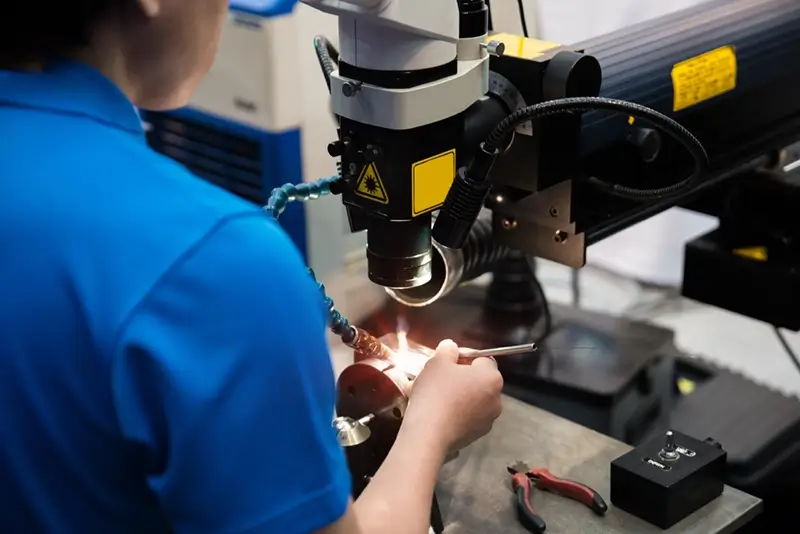
Worker welding repair mold and die part by Laser welding machine in factory.
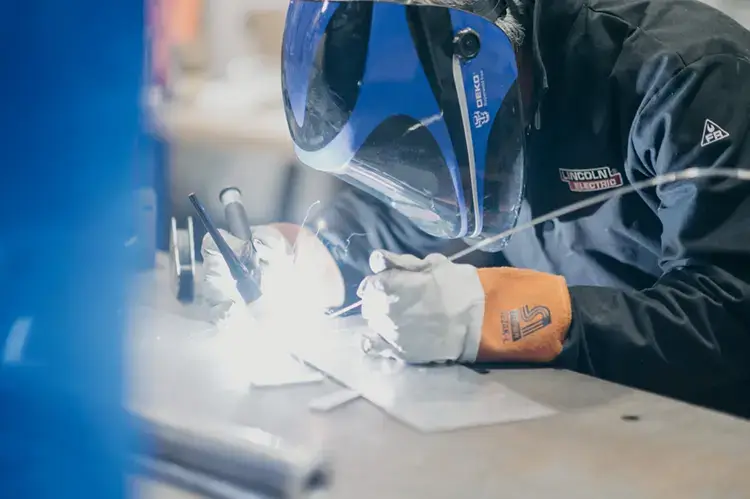
Treetown Tech employee welding metal

What We Design

Being solution-oriented, we are cell and design-agnostic and select optimal solutions for each application. By leveraging past product design and successes, we can build our experience into greater solutions in battery packs, module engineering, mechanical and electrical design, and ensure our rugged batteries can withstand abusive environments in military applications.

Understanding Prototype Types and Development Stages

Treetown Tech’s battery development process moves through four distinct prototype stages, each with a specific purpose:
Fieldable Prototypes

Built for real-world conditions before full-scale production. The test is functionality and durability under actual operating loads, not lab performance.

Serial Prototypes

Small batches used to develop and evaluate manufacturing methods and assembly sequences, where the production process gets stress-tested alongside the design.

Pilot Scale Prototypes

Closer to intended production scale. Systems, processes, and quality control get validated at volume before commitment.

Transition-to-Volume Production Prototypes

Final design confirmation, and the last checkpoint before production begins.
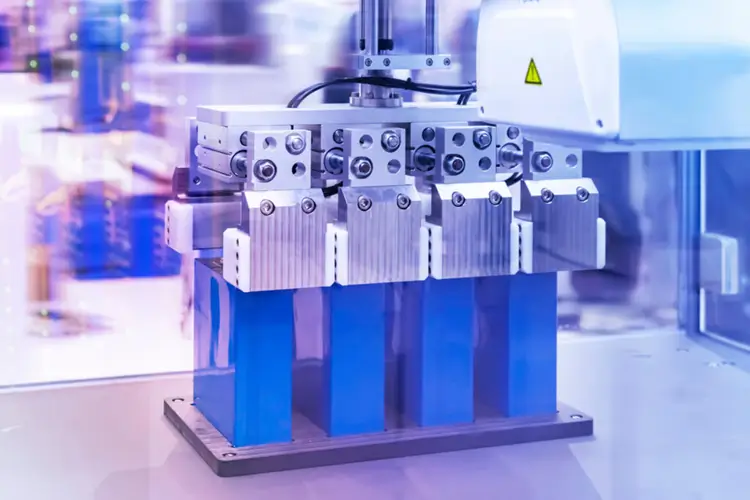
artificial intelligence machine at industrial manufacture factory of lithium battery

Performance & Validation

Our team ensures that the battery pack works as intended via performance and validation testing. Through rigorous validation and analysis for cell selection, battery-scale end-of-line testing, and life testing alongside accurate parameterization for BMS control, you have confidence in production and field use. We are determined to find every problem and challenge before they become costly ones and leverage performance and validation testing and service to achieve just that.

Delivering on Battery Pack Designs

Innovative designs are well and good, but only if they’re practical and they can actually be built in real-life. Our battery-building assets include:

Machine Shop

CNC milling machines and a wide variety of shop tools to create custom designs for battery holders or cooling systems, along with cutting, shaping, and assembling critical components for battery pack structure.

High bay assembly area with hoist

ideal for assembling large or heavy battery packs, such as for electric vehicles or industrial equipment.

3D Printer Lab

Excellent for rapid prototyping and quick design iteration of battery pack components, including custom connectors, internal spacers, and enclosures.

Electrical Engineering Lab

Designing electrical circuitry and testing battery management systems, power distribution systems, and ensuring the electrical integration of the battery pack. Essential for validating key electrical components.

Electrical Equipment Integration Lab

Integrating charging circuits, battery protection circuits, and monitoring systems into the battery pack are all focused alongside testing safety and functionality

Software Integration Lab

Programming and calibration of systems that manage battery charge cycles, communication with other equipment, and temperature control.

Frequently Asked Questions

A BMS is the electronic system that monitors and controls a battery pack's operation by measuring cell voltages and temperatures, managing charge and discharge cycles, preventing thermal runaway, and communicating state-of-charge data to the host system.

For a custom battery pack, the BMS determines whether the pack is safe and reliable in the specific application. A generic or undersized BMS is one of the most common failure points in custom battery development.

Treetown Tech designs BMS solutions matched to the application's actual requirements.

Lithium-ion cells require tight voltage management. Overcharge and over-discharge both cause permanent damage and create thermal runaway risk. BMS design for Li-ion must be precise on charge termination, cell balancing, and temperature monitoring in a way that's less critical for chemistries like NiMH or lead-acid. SOC estimation algorithms also differ significantly by chemistry.

Treetown Tech designs BMS solutions for lithium-ion, LiFePO4, and other chemistries; cell selection drives the BMS architecture.

Thermal management strategy varies based on application parameters, including operating temperature range, discharge rate, available space and weight budget, and whether the environment runs hot, cold, or is variable.

Liquid cooling delivers the highest thermal performance but adds weight and complexity.

Phase-change materials suit weight-constrained applications with moderate heat loads.

Active airflow works in industrial enclosures with room to move air.

Passive thermal management, heat spreaders, conductive potting, and thermally optimized geometry fit applications where simplicity and reliability take priority.

Thermal analysis runs alongside pack design so the strategy matches the actual load, not an estimate made after the architecture is set.

Our standard validation process covers UN38.3 for transport safety, IEC 62133 for portable sealed secondary cells, and MIL-STD-810 for environmental engineering requirements on defense and military applications.

For programs with specific platform requirements, such as the 6T or CWB battery standards used in certain military vehicle and equipment programs, we design to those standards as part of the program requirements.

Applicable standards depend on the application and market; we identify them at the start of a program and build the test plan around them.

Ruggedization is an integrated design requirement across every subsystem. It addresses the failure modes that standard commercial battery designs don't account for, such as mechanical shock and vibration, extreme temperature ranges, ingress protection from moisture and contaminants, and fail-safe behavior under damage or abuse.

For military applications, this means designing to MIL-STD shock and vibration specifications, using cell mounting and interconnect approaches that tolerate physical stress, and implementing protection circuits that fail safely under fault conditions.

As early as possible during conception. Cell chemistry and pack architecture decisions made early constrain everything downstream. Engaging at the concept stage means those constraints are visible before they're baked in. Treetown Tech engages at concept, prototype, or production stages. The earlier the engagement, the more leverage there is to optimize the design before the decisions get expensive to revisit.

Yes. UAV battery systems trade differently than other applications; weight is a hard constraint, discharge rates are high and non-linear, thermal management happens in an airframe with limited space, and for defense applications, NDAA compliance extends to battery components and supply chain.

Treetown Tech designs custom packs and BMS for UAV applications in-house, with domestic supply chain sourcing for programs that require it.

See our UAV engineering page for more on how battery work integrates with flight system development.

Partner With the Engineers at Treetown Tech

Do you have a demanding application? Treetown Tech can turn your ideas into real-world solutions. Tell us more about your project, and we’ll help you identify risks, manufacture prototypes, validate designs, and even provide production support.

Call Now
Contact
Start Project