Treetown Tech white logo

 Li-Ion Battery Engineering: Why Expertise Matters

Treetown Tech

Li-ion battery engineering isn’t just a hard science. It’s an art that requires creative thinking, and sometimes, a little bit of magic. Learn more.

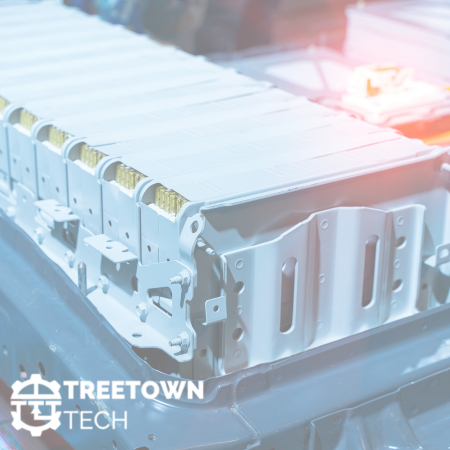
A battery pack
Table Of Contents

Battery engineering isn’t just a hard science. It’s creative thinking and, yes, magic. Mastering lithium-ion (Li-ion) battery development takes more than understanding formulas. It also takes experience, iteration, and ingenuity.

Treetown Tech considers battery development both a science and an art. Here’s why:

The Science: Chemistry, Physics, & Control

Li-ion battery development is grounded in fundamental disciplines, including electrochemistry, materials science, and thermodynamics. The scientific challenges are complex and interdependent:

  • Electrochemistry: Energy density, cycle life, and safety all begin with chemical choices. Poor designs lead to inefficiency, short lifespan, or even dangerous failure modes like thermal runway.
  • Materials Science: Engineers must select and combine materials with optimal ionic conductivity, chemical stability, and structural integrity, often working with next-gen compounds still being characterized.
  • Thermodynamics: Heat is the enemy. Batteries need active or passive systems that manage temperature without adding size, weight, or cost, requiring precision modeling and system integration.

The Art: Experience, Instinct, & Innovation

Even the best equations don’t fully explain how a battery will behave over thousands of cycles, under different loads, or in varying climates. That’s where the “dark arts” come in:

  • Optimization: There’s no universal best battery. Engineers must trade off between energy density, lifespan, charge rate, safety, cost, and supply chain realities. These decisions are nuanced, contextual, and often based on intuition developed over many builds.
  • Customization: From EVs to IoT to grid-scale storage, every application has unique demands. Bespoke battery designs and pack integrations are often required. Standard “off-the-shelf” packs just don’t cut it.
  • System Integration: Batteries don’t work in isolation. Packaging, thermal constraints, electrical interfaces, and battery management system design all require cross-disciplinary coordination.

Which Areas of Battery Engineering Are the Hardest to Master?

  • Predictive Modeling: Understanding how a battery will age or fail.
  • Scaling Up: Lab performance doesn’t always translate to manufacturing reliability.
  • Failure Analysis: Diagnosing failure mechanisms requires expertise in chemistry, diagnostics, and root-cause analysis.

You Need an Expert. Treetown Tech Is Ready.

Battery engineering isn’t a field where generic engineering experience transfers smoothly. Without dedicated expertise, even well-funded companies risk:

  • Underperforming battery packs
  • Excessive thermal issues
  • Costly manufacturing redesigns
  • Dangerous field failures

Treetown Tech brings years of hands-on, cross-functional battery experience, from cell selection to pack integration to BMS software. We’re here to help you de-risk development and deliver reliable, high-performance energy systems.

Are you ready to get started? Visit our website to learn more about our capabilities, or contact us today to schedule a project consultation.

From Concept to Production,
Faster, Smoother, With Less Risk.

You have the vision. We have the team and expertise to get it built. Let's collaborate to innovate, problem-solve, and de-risk every step of the way.