
Treetown Tech white logo
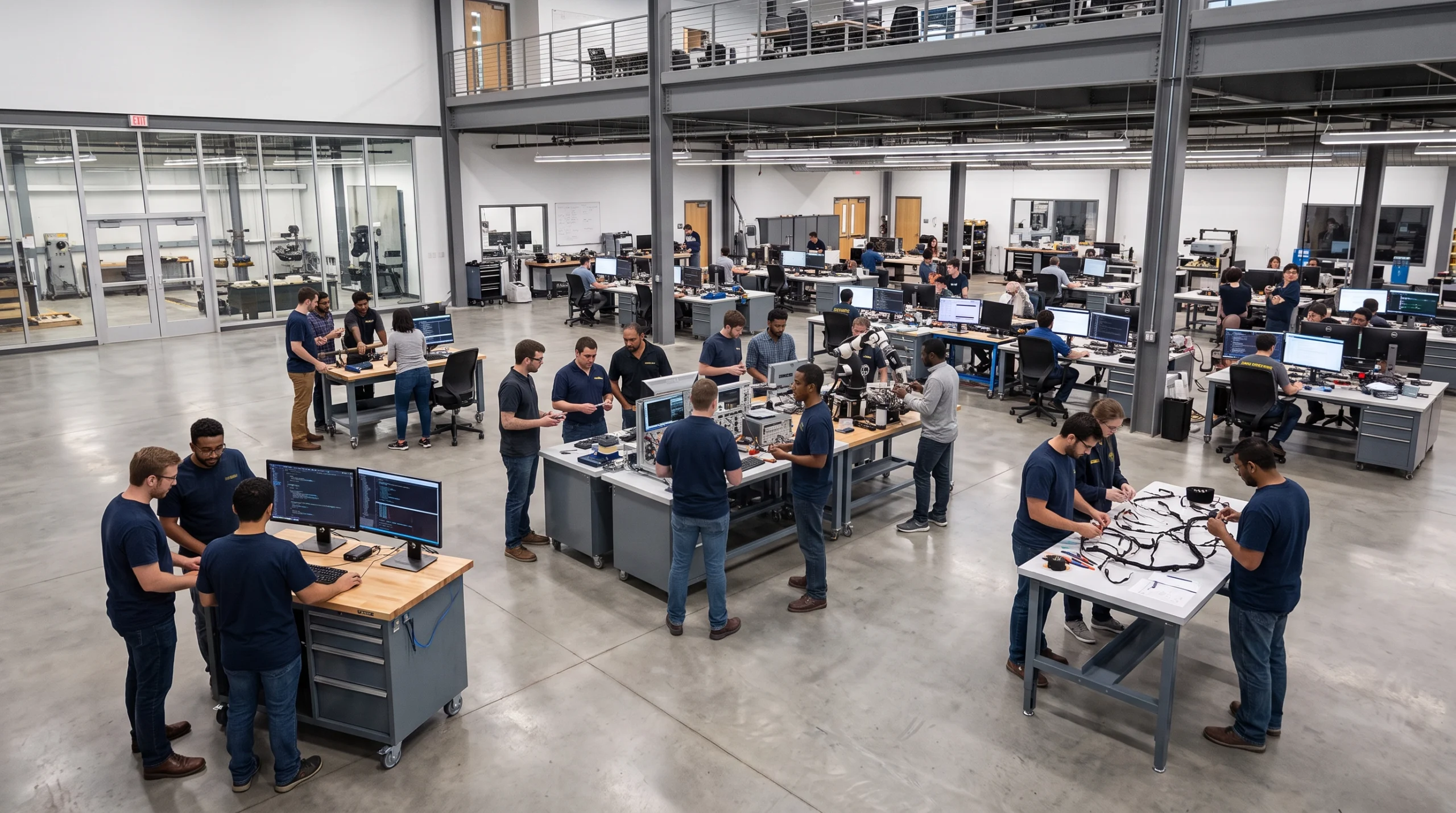
Wide shot of the Ann Arbor facility with engineers from multiple disciplines visible at adjacent workstations or gathered around a prototype. Conveys the co-location advantage: one team, one room, one prototype.

Hardware Engineering & Product Development

Hardware engineering and product development is harder than most timelines allow for. A concept that works in simulation hits unexpected problems in the first prototype. A prototype that works in the lab behaves differently in the field. Each gap costs time, money, and in some cases, the project.

Treetown Tech is a hardware engineering and product development partner for companies that need to get complex, integrated products built right. We handle the full development cycle, including mechanical, electrical, software, and battery systems engineering, working as one team from first prototype through production-ready design.

Hardware Product Development Needs an Integrated Approach

The engineering disciplines in a complex hardware product- mechanical, electrical, embedded software, power systems- each have their own logic and their own failure modes. The integration between them is where most development projects lose time.

Mechanical design creates constraints the electrical team discovers late. Firmware assumptions about hardware behavior turn out to be wrong when the actual hardware arrives. These aren't unusual problems; they're what happens when hardware product development is treated as a series of sequential handoffs. Each handoff creates a boundary, and each boundary creates a surprise.
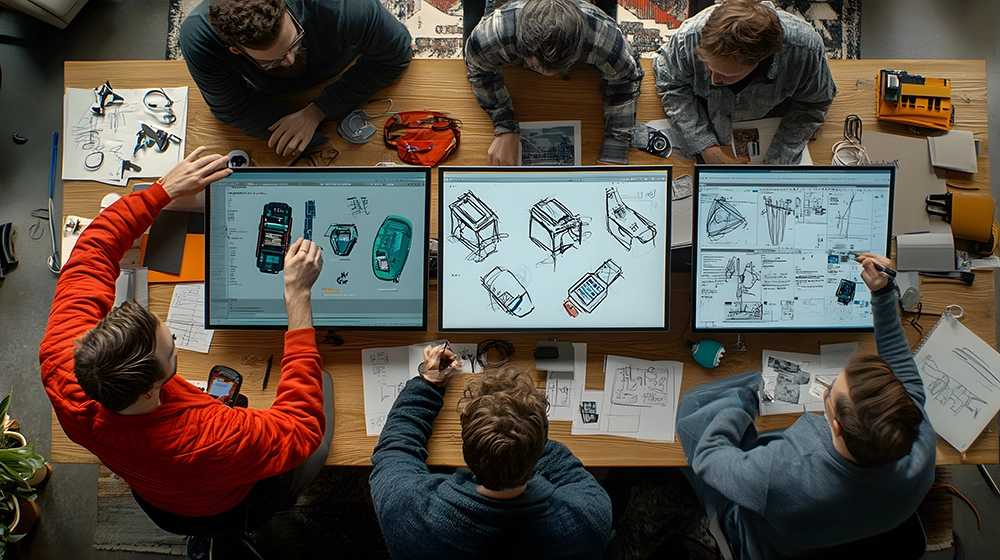
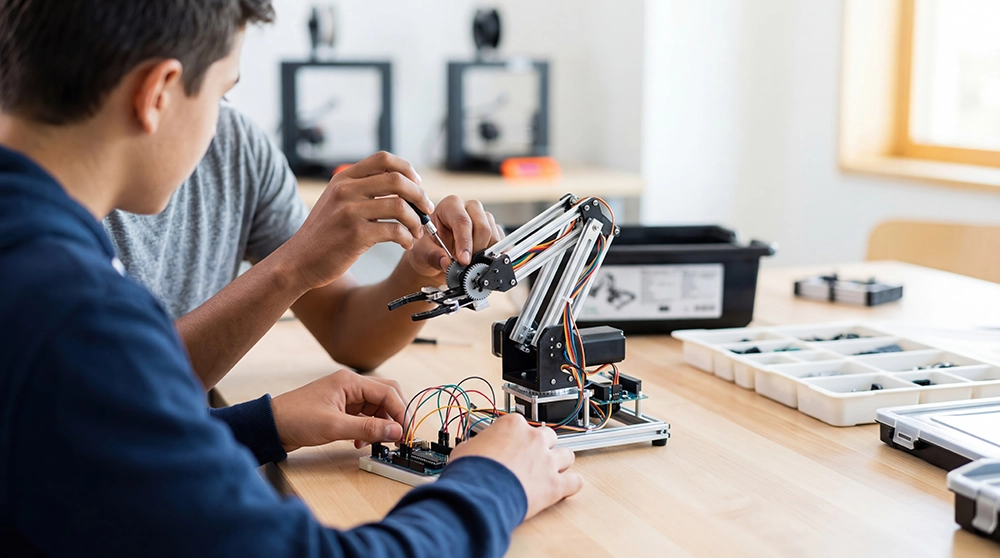
Treetown Tech hardware product development team working on integrated prototype in Ann Arbor facility

How Treetown Tech Works

Cross-Disciplinary Integration

Treetown Tech takes an integrated systems approach to hardware product development. Our mechanical engineers, electrical engineers, and firmware developers work in the same room on the same prototype and collaborate to resolve problems that surface during development.

Risk-First Development Sequence

We identify the highest-risk technical question in the project and build a prototype to answer that question first. The industrial design can be refined; finding the fatal flaw in week three is better than finding it in month six.

DFM Embedded Throughout

Treetown Tech embeds design for manufacturability (DFM) thinking from the first prototype. By embedding DFM throughout our hardware product development process, we help shorten the transition between prototype and production and keep production cost estimates reliable.
Cross-disciplinary engineering: mechanical and electrical engineers at the same workbench

Do You Need a Hardware Product Development & Engineering Partner?

  • Yes: Your project crosses disciplines your team doesn’t have: Bringing in a partner that covers missing disciplines is faster and less risky than hiring and ramping up.
  • Yes: Internal bandwidth is the constraint, not capability: Your team could build this, but they're already committed. An outside partner adds capacity without adding headcount.
  • Yes: The prototype isn't working, and you don't know why: Pattern recognition from previous hardware development programs is often faster than systematic debugging from first principles.
  • Yes: You need to get to production faster than your current trajectory allows: A partner that has been through the prototype-to-production transition many times brings a development process that compresses the timeline.

Industries and Applications

Treetown Tech's hardware product development work spans industries where the engineering problems are real and the stakes matter:

Defense and UAV Systems

NDAA-compliant UAV platforms, hardened electronics, battery-optimized flight systems for mission-critical applications.

Food and Beverage Production Equipment

Production-scale systems with food-safe material requirements and hygienic design.

Transportation and Accessibility Hardware

Cross-jurisdictional compliance and mechanical reliability under variable conditions.

IoT and Connected Products

Embedded hardware, firmware, wireless connectivity, and cloud integration for industrial and commercial connected systems.

Sports Performance

Hardware and sensor systems for athlete and equipment performance applications.

Utilities and Power

Hardware engineering for energy infrastructure and grid technology systems.

Hardware-in-the-loop Test Infrastructure

HIL test systems for validating control software and hardware ahead of production deployment.

Working With Treetown Tech

Most hardware product development and engineering projects start with a conversation about the project. We want to know what you're trying to build, where you are in development, and what the hardest open technical question is.

From there, we scope the engagement around the actual work: prototype development, a specific discipline gap, the prototype-to-production transition, or the full development cycle.

When you work with Treetown Tech:

  • IP Stays with You: Everything developed during a Treetown Tech engagement, including designs, firmware, test data, and developed IP, belongs to you.
  • You Get One Team: Mechanical, electrical, software, and battery engineers stay under one roof. We never subcontract the hard parts.
  • The Scope Assessment Is Honest: We'll tell you what we think the project actually involves, including the parts your current timeline or budget doesn't account for.
Hardware prototype at production transition stage, DFM review in progress

Frequently Asked Questions

A staffing firm provides engineers who work within your process and under your direction. Treetown Tech operates as a development partner, meaning that we e bring our own process, make engineering recommendations, and own the integration between disciplines.

The practical difference is that you're not managing the mechanical-electrical-software coordination problem—we are.

  • What the product is (function, market, performance requirements)
  • Where you are in development (concept, stuck prototype, working prototype that needs to scale)
  • What disciplines are involved
  • What the timeline and volume targets are
  • What the critical open technical questions are.

You don't need a complete spec. In fact, if you had a complete spec, you probably wouldn't need us. The open questions are where the engagement scope comes from.

Yes. We support the full development cycle, including concept development, prototype builds, iterative testing, DFM, supplier qualification, and production transition. We scope the engagement around where the work actually starts.

Client IP is client IP. Everything developed during an engagement with Treetown Tech belongs to the client. We don't retain licenses, we don't use client IP for other projects, and we don't require equity or royalty arrangements as a condition of engagement. This is standard for all clients.

For a moderately complex product, one that involves two or three disciplines with no novel technology or regulatory certification, a realistic timeline from concept to production-ready design is nine to fifteen months, including prototype iterations.

Products with novel technology, complex certification requirements (medical, defense, regulatory), or significant integration complexity run longer. The most useful timeline estimate comes after the system architecture is defined because that's where most of the schedule risk lives.

Partner With the Engineers at Treetown Tech

Do you have a demanding application? Treetown Tech can turn your ideas into real-world solutions. Tell us more about your project, and we’ll help you identify risks, manufacture prototypes, validate designs, and even provide production support.

Call Now
Contact
Start Project