The concept of a Minimum Viable Product (MVP) is well established in software development. Build something simple, test it quickly, learn from users, and improve. In hardware, the idea is similar – but implementing it is more complicated. Unlike software, hardware can’t be updated instantly after release. Physical components, manufacturing processes, and safety considerations add […]
Table Of Contents
The concept of a Minimum Viable Product (MVP) is well established in software development. Build something simple, test it quickly, learn from users, and improve.
In hardware, the idea is similar – but implementing it is more complicated.
Unlike software, hardware can’t be updated instantly after release. Physical components, manufacturing processes, and safety considerations add constraints that software teams don’t face.
So what does “minimum” really mean when you’re building hardware?
Minimum Doesn’t Mean Incomplete
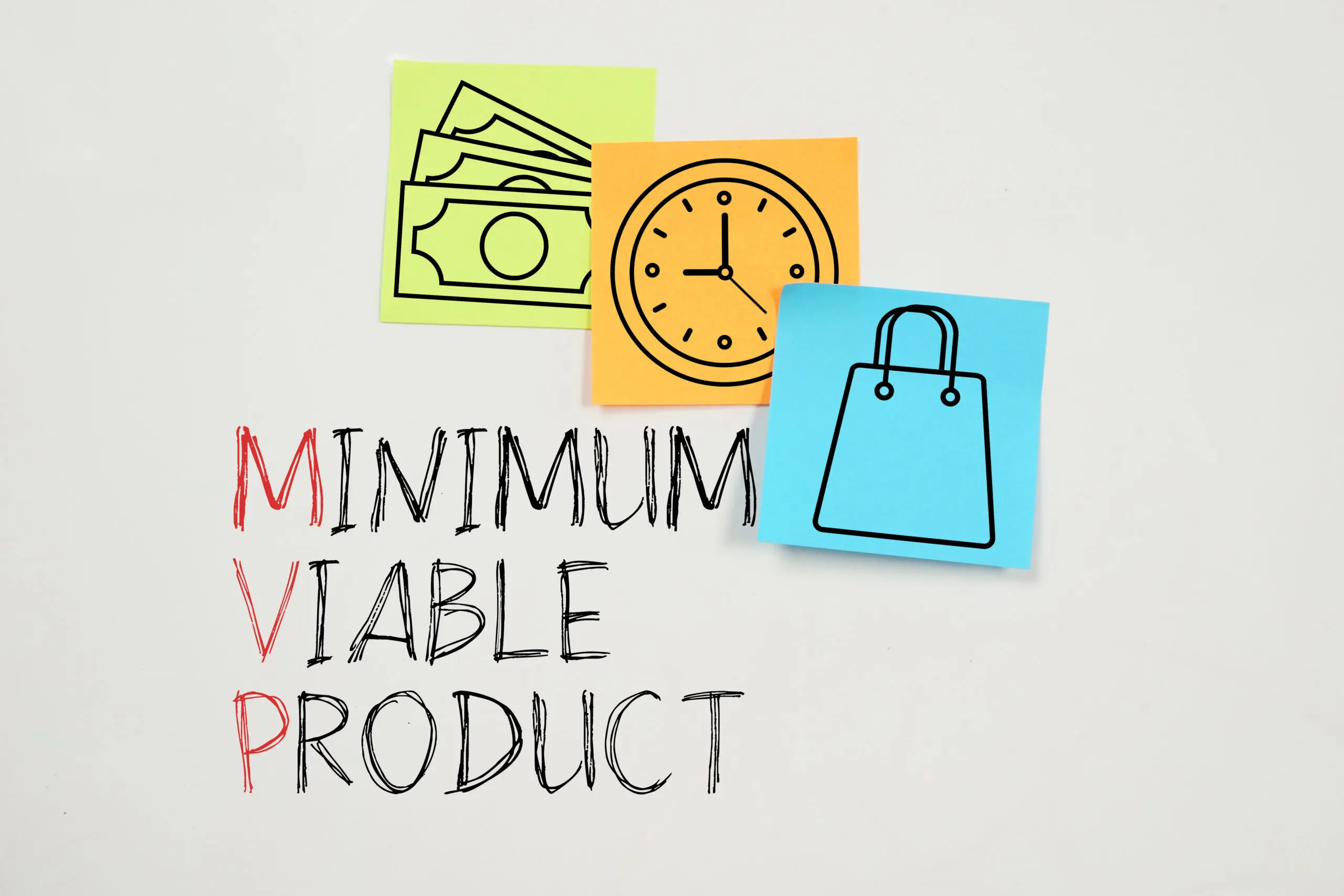
MVP: Minimum viable product concept for a startup. Analysis and market validation for New product release planning
One of the biggest misunderstandings about hardware MVPs is that “minimum” means cutting corners.
It doesn’t.
A hardware MVP still needs to be safe, reliable, and capable of performing its core function. What it doesn’t need is every feature planned for the final product.
Instead, the MVP focuses on the essential capabilities that prove the product concept works.
Think of it as answering the most important questions first.
The Core Questions an MVP Should Answer
A good hardware MVP typically validates three things.
1. Does the core technology work? If the product relies on a new mechanism, thermal solution, or electronic architecture, the MVP should confirm that it performs as expected.
2. Does it solve the intended problem? The MVP should demonstrate that the product actually delivers the value to users that it’s intended to.
3. Can it realistically be manufactured? Even early prototypes should consider whether the design could eventually transition to production.
If those questions are answered successfully, the development team can move forward with confidence.
What an MVP Often Leaves Out
A hardware MVP usually excludes features that are helpful but not essential.
Examples might include:
Secondary user interface improvements
Additional connectivity options
Cosmetic refinements
Non-critical automation features
These elements can be added later once the foundation of the product is proven.
Why MVP Thinking Matters in Hardware
Hardware development is expensive compared to software. Tooling, materials, and manufacturing processes all add cost.
An MVP reduces the risk of investing heavily before validating key assumptions.
That information also helps guide future development decisions.
Learning Before Scaling
In hardware development, learning quickly is one of the most valuable things an engineering team can do. So the most valuable outcome of an MVP is learning, and the goal of the MVP is to create the fastest path to meaningful feedback.
Early prototypes often reveal unexpected behavior, usability challenges, or integration issues. So the team discovers them before production tooling is developed.
Business growth and scaling strategy. Conceptual process representing innovation, planning, and achieving goals step by step
Defining the right scope for a hardware MVP can make a big difference in how quickly you learn from early prototypes.
If you’re planning an initial prototype or early product version and want help identifying the most important technical questions to answer first, our team works with companies at this stage all the time.
Feel free to reach out if you’d like to discuss your concept or development approach. Reach out to us here
Do you have a demanding application? Treetown Tech can turn your ideas into real-world solutions. Tell us more about your project, and we’ll help you identify risks, manufacture prototypes, validate designs, and even provide production support.
To provide the best experience on our website, we use cookies to store and / or access device information.
Functional
Always active
The technical storage or access is strictly necessary for the legitimate purpose of enabling the use of a specific service explicitly requested by the subscriber or user, or for the sole purpose of carrying out the transmission of a communication over an electronic communications network.
Preferences
The technical storage or access is necessary for the legitimate purpose of storing preferences that are not requested by the subscriber or user.
Statistics
The technical storage or access that is used exclusively for anonymous statistical purposes. Without a subpoena, voluntary compliance on the part of your Internet Service Provider, or additional records from a third party, information stored or retrieved for this purpose alone cannot usually be used to identify you.The technical storage or access that is used exclusively for anonymous statistical purposes. Without a subpoena, voluntary compliance on the part of your Internet Service Provider, or additional records from a third party, information stored or retrieved for this purpose alone cannot usually be used to identify you.
Marketing
The technical storage or access is required to create user profiles to send advertising, or to track the user on a website or across several websites for similar marketing purposes.