A product requirements document (PRD) is supposed to create clarity. It lays out what a product needs to do, who it’s for, and what success looks like. In theory, it keeps everyone aligned. In practice, it can also hide problems. Requirements documents often contain assumptions, vague language, or conflicting goals. Those issues might not show […]
Table Of Contents
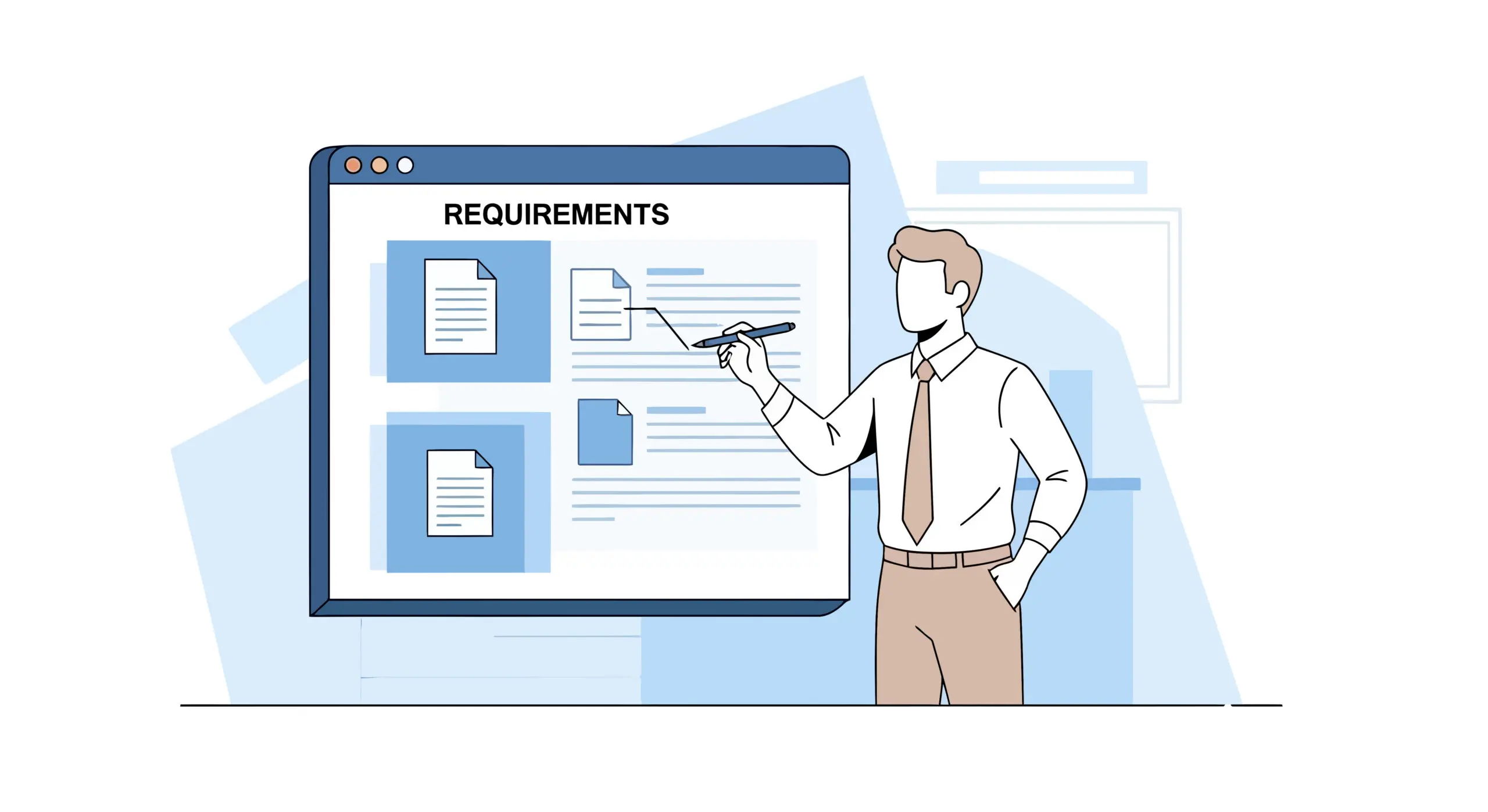
A product requirements document (PRD) is supposed to create clarity. It lays out what a product needs to do, who it’s for, and what success looks like.
In theory, it keeps everyone aligned.
In practice, it can also hide problems.
Requirements documents often contain assumptions, vague language, or conflicting goals. Those issues might not show up until engineering is already underway – and by that point, they can cause delays, redesigns, and plenty of frustration.
Most teams assume the PRD is the safe starting point. But it’s worth treating it as a hypothesis rather than a final truth.
Let’s look at a few common risks that hide inside requirements documents.
Ambiguous Language
One of the biggest problems with requirements is wording that sounds clear but isn’t measurable.
Statements like:
“The product should be lightweight.”
“The system should be fast.”
“The device should have long battery life.”
These sound reasonable, but engineers need numbers. Lightweight compared to what? How fast? Long battery life under which conditions?
Ambiguity forces engineers to guess. And when multiple teams guess differently, misalignment is almost guaranteed.
Good requirements replace adjectives with measurable targets.
Two speech bubbles with tangled lines inside show confusion in communication, showing how messages can become unclear and mixed up
Conflicting Goals
Many requirements documents try to optimize everything at once. Smaller size, lower cost, higher power, longer battery life, faster performance.
Unfortunately, engineering is a world of tradeoffs.
Reducing size may increase heat density. Lower cost may limit component choices. Higher performance may increase power consumption.
If those tradeoffs aren’t acknowledged early, they tend to show up later as design conflicts. Suddenly teams are trying to satisfy requirements that were never compatible in the first place.
Hidden Technical Risk
Sometimes requirements assume certain technologies or performance levels are easy to achieve. But the engineering reality might be more complicated.
For example:
A thermal requirement that’s difficult to achieve within a given enclosure size
Battery life expectations that exceed what the chemistry can realistically deliver
Structural targets that conflict with weight limits
When those risks aren’t identified early, teams spend valuable time chasing unrealistic goals.
How to Reduce Requirements Risk
The solution isn’t writing longer documents. It’s having better conversations about them.
Before development begins, engineering teams should review requirements and ask a few simple questions:
Is this requirement measurable?
Is it technically achievable?
What assumptions does it rely on?
What happens if it conflicts with other requirements?
A thorough requirements review often reveals issues that would otherwise appear months later.
That’s not a failure of the PRD. It’s exactly why the review process exists.
A good requirements document doesn’t eliminate uncertainty. But it should reduce it enough that engineers can move forward with confidence.
Because the earlier you challenge assumptions, the easier they are to fix.
If you’re starting a new product development project – or revisiting requirements that have evolved over time – it can be helpful to have an experienced engineering team review them before design work begins.
A quick technical review can uncover hidden assumptions, conflicting requirements, or potential engineering risks early in the process.
If you’d like another set of engineering eyes on your requirements or early product concept, feel free to contact the team at Treetown Tech. We’re always happy to talk through ideas and help identify potential challenges before they become expensive ones.
To provide the best experience on our website, we use cookies to store and / or access device information.
Functional
Always active
The technical storage or access is strictly necessary for the legitimate purpose of enabling the use of a specific service explicitly requested by the subscriber or user, or for the sole purpose of carrying out the transmission of a communication over an electronic communications network.
Preferences
The technical storage or access is necessary for the legitimate purpose of storing preferences that are not requested by the subscriber or user.
Statistics
The technical storage or access that is used exclusively for anonymous statistical purposes. Without a subpoena, voluntary compliance on the part of your Internet Service Provider, or additional records from a third party, information stored or retrieved for this purpose alone cannot usually be used to identify you.The technical storage or access that is used exclusively for anonymous statistical purposes. Without a subpoena, voluntary compliance on the part of your Internet Service Provider, or additional records from a third party, information stored or retrieved for this purpose alone cannot usually be used to identify you.
Marketing
The technical storage or access is required to create user profiles to send advertising, or to track the user on a website or across several websites for similar marketing purposes.